Shred Box delivers physics-driven slicing puzzles for short mobile sessions
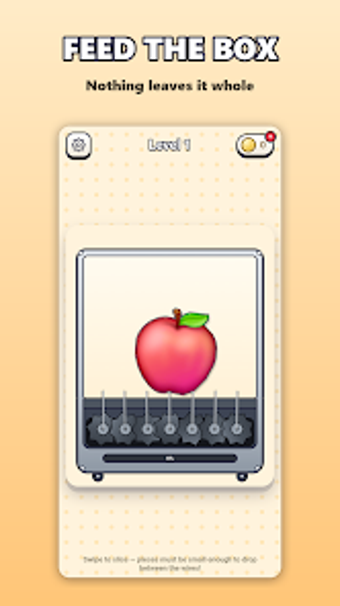
Shred Box, from Kidga, is a physics-based arcade puzzle that tasks players with precise object destruction to meet level goals. Players slice objects to alter their shape and trajectory so pieces meet stage constraints, turning each cut into a small spatial puzzle. The app focuses on tactile slicing physics, concise stages, and occasional reward events. It targets mobile players who prefer short, repeatable puzzle sessions and pick-up play without commitment.
It reframes swipe slicing as level-based puzzles rather than endless scoring
The app moves away from pure score-chasing and frames each stage as a spatial problem, asking the player to meet a layout constraint under limited conditions. Progression proceeds through discrete stages with distinct objectives, and the design supports two explicit challenge types: timed speed runs and precision runs that limit the number of cuts. This structure prioritizes careful planning over frantic repetition, favoring measured decisions at each stage.
Designed for solo, short-session play with offline availability
The experience prioritizes independent play and short sessions, which suits a mobile context. The developer includes offline functionality so sessions do not require constant connectivity, and levels are compact to fit brief play windows. The design choices point at solo puzzle consumption rather than competitive or social modes, making the app appropriate for commuters and players who want quick, self-contained challenges.
Audio and visuals sell the act of destruction with mechanical detail
Visual and sound design support the game's core loop by giving each slice tangible feedback: debris effects, sparks from steel surfaces, and the mechanical motion of the shredder convey consequence. The presentation frames destruction as an event, and auditory cues highlight successful cuts and bonus completions. The interface keeps focus on the playfield so the sensory feedback remains the primary reward for each action.
Accessible controls meet a gradually demanding progression curve
The control scheme uses a single-finger swipe that keeps basic actions approachable while later stages require more precise timing and angle choices. A progression system unlocks additional items and stages as players clear content, and special reward rounds appear after filling in-chest objectives. This design creates a gentle learning ramp that shifts into tighter precision challenges for players who pursue mastery.
The app suits short-session puzzle players seeking tactile challenges
The app is a suitable choice for mobile players who favour brief, repeatable puzzle sessions built around careful decision-making and sensory feedback. Those seeking competitive multiplayer, extensive social features, or narrative depth should consider other options. In summary, the app rewards players who enjoy focused, solitary puzzle loops and steady stage-by-stage advancement rather than social competition.